

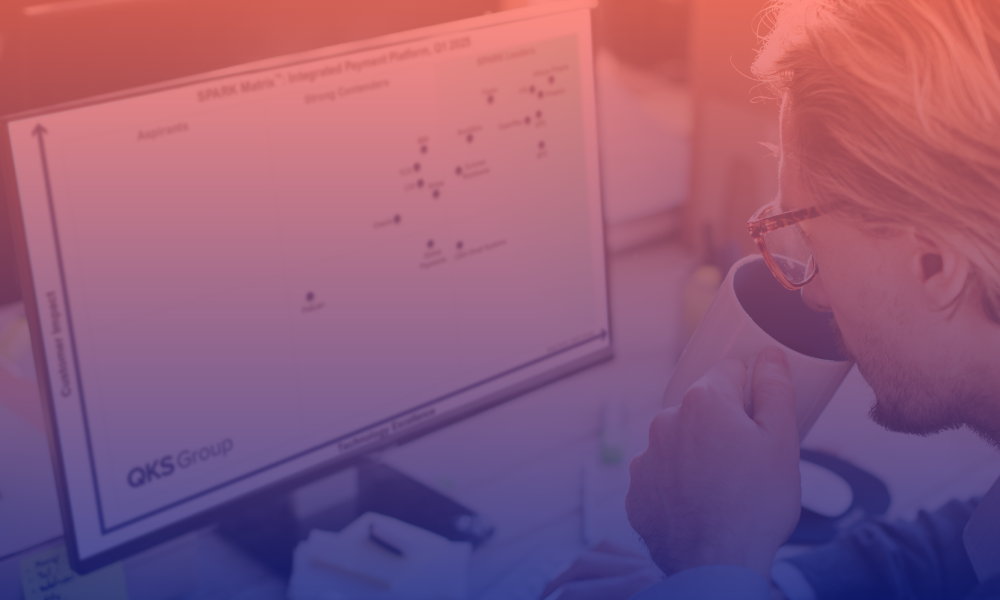
Desktop as a Service has moved beyond its role as a cloud-hosted substitute for traditional virtual desktop infrastructure (VDI). It is now evaluated as a strategic workspace layer. It combines secure remote access, centralized management, cost control, and end-user experience optimization. The latest SPARK Matrix™ for Desktop as a Service by QKS Group reflects this shift. The market is now shaped by multicloud orchestration, managed service maturity, AI-driven operations, digital experience analytics, and workload flexibility.
Enterprises now seek DaaS platforms that reduce operational complexity and support hybrid and distributed workforces. They should also integrate with broader security and ITSM frameworks and deliver consistent performance across diverse workloads.
According to Manish Thakur, Senior Analyst at QKS Group, “DaaS is becoming a core enabler of hybrid work, allowing IT teams to align performance, security, and compliance with measurable productivity and experience outcomes. Providers that can bring together automation, analytics, and experience-centric workspace orchestration in a single, adaptable platform will shape the next phase of digital workplace transformation.”
Why DaaS accelerated in 2025
Several themes stand out across the market. AI-driven operations are beginning to influence desktop provisioning, troubleshooting, and performance management. Managed DaaS models are gaining ground as enterprises try to reduce dependence on scarce virtualization expertise. At the same time, cloud-agnostic orchestration is gaining traction. Enterprises want flexibility across Azure, AWS, Google Cloud, and private environments. Meanwhile, experience analytics is also becoming central to evaluation. Vendors are now measured on responsiveness, login times, and productivity rather than infrastructure uptime alone.
The result is a market where leadership depends on more than virtualization depth. As a result, vendors must unify multiple capabilities into a single platform. These include cloud control planes, secure connectivity, endpoint flexibility, orchestration, image management, APIs, and governance.
SPARK Leaders: Where maturity and workspace orchestration converge
The Leaders quadrant is crowded, which reflects the maturity and competitive depth of the category.
Microsoft leads with a dual-model strategy that few competitors can match. Azure Virtual Desktop offers flexibility and infrastructure-level control, while Windows 365 simplifies deployment through a Cloud PC model. Combined with deep integration across Microsoft 365, Entra ID, Intune, and Defender, Microsoft delivers a unified workspace and security framework suited to enterprises already invested in its ecosystem.
Omnissa builds on the legacy strength of VMware Horizon while transitioning to a cloud-first model. Horizon Cloud, Universal Broker, and Freestyle Orchestrator provide strong capabilities in lifecycle management, automation, and hybrid orchestration. Its integrated DEX capabilities further align operations with user experience metrics, positioning it well for large, distributed enterprise environments.
Amazon Web Services continues to stand out with a broad and flexible DaaS portfolio. WorkSpaces and AppStream 2.0 enable a mix of persistent desktops and application streaming, supported by deep automation through APIs and infrastructure-as-code. Its tight integration with the AWS ecosystem makes it particularly attractive for organizations prioritizing scalability and cloud-native operations.
Citrix remains a strong player for enterprises requiring hybrid and multicloud deployments. Its unified control plane, analytics capabilities, and secure access framework support complex use cases across regulated industries. Citrix’s strength lies in maintaining operational consistency across on-premises and cloud environments.
Parallels differentiates through simplicity and cost-effective delivery. Its unified platform for application and desktop virtualization, combined with strong endpoint compatibility and hybrid deployment flexibility, makes it well-suited for mid-sized enterprises, MSPs, and education environments.
The Rise of Managed, Multicloud, and Performance-Centric DaaS
Dizzion stands out for its balanced approach to performance, security, and operational simplicity. Its Frame-based platform supports true multicloud deployment across AWS, Azure, Google Cloud, IBM Cloud, and Nutanix, allowing enterprises to align workloads with cost, compliance, and regional requirements.
Dizzion is ideal for organizations with performance-intensive or regulated workloads. Its support for GPU acceleration using NVIDIA and AMD technologies enables high-fidelity experiences for use cases such as engineering, design, and healthcare imaging. The platform’s Frame Remoting Protocol, optimized for low latency and high-quality rendering, ensures consistent performance across devices and network conditions.
The introduction of Halo extends the platform’s scope beyond traditional virtual desktop delivery to include secure browser-based workspace access and policy enforcement. This enables organizations to apply Zero Trust controls and SaaS governance without relying exclusively on full desktop virtualization.
XTIUM benefits from its managed services-centric approach. Its Cloud Workspace platform combines desktop delivery with integrated security, compliance, and performance monitoring, making it a strong fit for industries such as healthcare and financial services.
Anunta emphasizes turnkey delivery through its fully managed DaaS offerings. By integrating orchestration, monitoring, and user support, it enables enterprises to adopt cloud desktops without building in-house expertise, particularly in regulated sectors.
Flexxible brings a vendor-agnostic orchestration model to the Leaders quadrant. Its ability to unify Citrix, VMware, Microsoft AVD, and Parallels environments under a single control plane, combined with DEX analytics and cost optimization, makes it particularly relevant for organizations pursuing hybrid and multicloud strategies.
Strong Contenders: Specialization and targeted value
Alibaba Cloud offers vertically integrated infrastructure and desktop delivery through its Elastic Desktop Service. Its strength lies in performance optimization, endpoint support, and compliance alignment within China and Asia-Pacific markets.
Apporto differentiates through its browser-native architecture and ease of deployment. Its HyperStream protocol supports high-resolution workloads, while integrated telemetry provides real-time insights into performance and user experience.
HP Inc. focuses on high-performance virtual desktops through its Anyware platform. Built on the PCoIP protocol, it delivers consistent, high-quality remote experiences for graphics-intensive workloads such as design and media production.
Accops stands out for its security-first architecture. With integrated zero-trust access, multifactor authentication, and strong endpoint flexibility, it is well-suited for organizations prioritizing secure remote access and hybrid deployment.
Workspot offers a streamlined, Azure-native DaaS solution with a SaaS control plane. Its centralized management, scalability, and integration with Microsoft services make it effective for enterprises seeking simplified deployment and predictable performance.
IronOrbit delivers strong capabilities for GPU-enabled and compliance-sensitive workloads. Its managed INFINITY Workspaces platform supports hybrid deployment and high-performance computing use cases across regulated industries.
oneclick provides strong value for MSPs and system integrators through its cloud-agnostic orchestration model, hybrid deployment flexibility, and ability to manage distributed environments under a unified control plane.
Aspirant: Flexibility with orchestration focus
Leostream offers a highly adaptive solution. Its support for multiple protocols, strong policy engine, and compatibility with diverse infrastructures make it well-suited for enterprises managing diverse virtualization environments.
Its strength lies in enabling centralized control and access management across multiple platforms, making it particularly suitable for hybrid environments where interoperability and policy consistency are critical.
What the 2025 SPARK Matrix™ signals
The DaaS market is transitioning from infrastructure delivery to intelligent workspace orchestration. Vendors are increasingly differentiated by their ability to combine secure access, multicloud flexibility, automation, and experience monitoring within a unified platform.
Future leadership will depend on how effectively vendors integrate predictive operations, digital experience analytics, and governance across distributed environments. As enterprises evaluate DaaS platforms, they are determining the balance between operational control and managed simplicity that best aligns with their internal capabilities and strategic priorities.
DaaS plays an increasingly important role in enabling secure, scalable, and experience-driven digital workspaces that support the evolving nature of enterprise work.